How Installing Solar Today Is Different Than in the Past
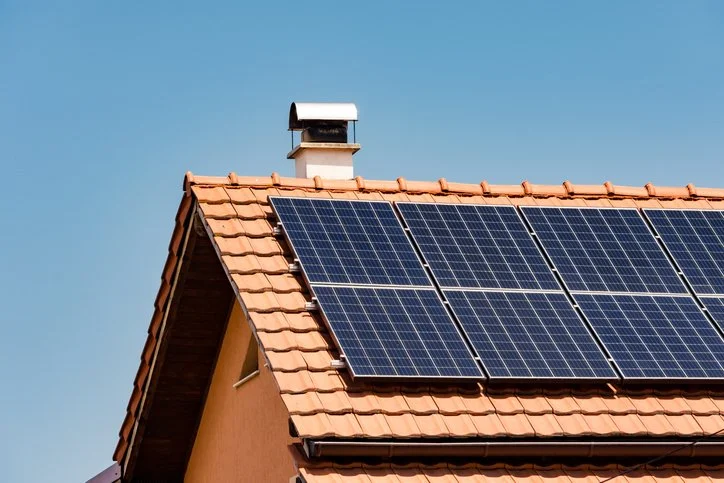
If solar panels have been on your radar for a while, you’re not alone. Many homeowners are exploring solar as a way to lower energy costs, reduce their environmental footprint, and take greater control of their household finances. But if you last looked into solar a few years ago, the financial picture has shifted in some meaningful ways.
The good news? Solar panels are significantly more affordable than they were even a decade ago, and new financing structures have emerged to help homeowners benefit from federal incentives. The less-good news? The straightforward tax credit that once made the decision easy for homeowner-owned systems is no longer available.
Here’s what has changed, what your options look like today, and why solar can be a smart part of a broader financial plan.
The Federal Tax Credit: What Was & What Is
For years, homeowners who purchased solar panels could claim the federal Residential Clean Energy Credit, a tax credit equal to 30% of their total installation costs. It was a dollar-for-dollar reduction in the income taxes owed, and for many families, it was the single biggest factor in making solar financially attractive. A $30,000 system effectively became a $21,000 system after the credit.
That credit was originally extended through 2034 under the Inflation Reduction Act. However, the One Big Beautiful Bill Act, signed into law on July 4, 2025, ended the residential solar tax credit for homeowner-owned systems as of December 31, 2025, with no phase-down period.
If you purchased and installed a system before that deadline, you can still claim the credit on your taxes. But for systems installed in 2026 and beyond, the 30% residential credit is no longer available for direct purchases.
A note of caution: Many online resources still reference the old timeline showing the credit available through 2032 or 2034. That information is outdated. If you’re researching solar, make sure you’re looking at sources updated after July 2025.
New Financing Paths: Leases, PPAs & the Prepaid Model
While the direct tax credit for homeowners is gone, federal incentives haven’t disappeared entirely. The commercial solar investment tax credit (Section 48E) remains available for third-party-owned systems through at least 2027. That means solar companies that own and install systems through lease or power purchase agreement (PPA) structures can still claim the credit, and they typically pass those savings on to homeowners in the form of lower monthly payments.
Here’s how the main options compare today:
Solar leases allow you to pay a fixed monthly fee to use solar equipment installed on your home. The leasing company owns the system, handles maintenance, and claims the tax credit. You benefit from lower electricity costs without a large upfront investment.
Power purchase agreements (PPAs) work similarly, except you pay for the energy the system produces rather than a flat monthly fee. Your rate is typically locked in below your local utility rate, so you may see savings from the start.
Prepaid PPAs (sometimes called lease-to-own) are a newer model gaining in popularity. You pay roughly 70% of the system cost upfront, a third-party company owns the system for six years (during which they claim the commercial tax credit), and then ownership transfers to you at no additional cost. This structure can give you an effective discount similar to what the old 30% tax credit provided, without needing to qualify for or claim any credit yourself.
Before 2026, buying a system outright was almost always the strongest financial play. Today, the math has changed, and lease and PPA arrangements may offer more competitive economics for many households.
As with any financial decision, the right structure depends on your specific situation, including your tax profile, cash flow, time horizon, and how long you plan to stay in your home.
The Bigger Picture: Solar Is More Affordable Than Ever
Even with the change in tax incentives, solar panels are dramatically more affordable than they were a decade ago. The average installed cost for residential solar has dropped roughly 50% since 2010, driven by manufacturing improvements, increased competition, and more efficient panel technology.
Modern panels are also about 40% more efficient than their 2010 counterparts, meaning you need fewer panels to achieve the same output.
Battery storage has followed a similar trend, with costs dropping sharply over the past 15 years. That matters because battery storage is increasingly important, particularly for homeowners in states where net metering has been replaced with less favorable net billing programs.
What Your State May Add to the Equation
State-level policies can significantly affect solar economics, and they vary widely.
In California, the shift to Net Energy Metering 3.0 (NEM 3.0) in 2023 changed how excess solar energy is valued.
Under the previous structure, homeowners received full retail credit for energy sent back to the grid. Under NEM 3.0, that credit is based on lower wholesale rates, making battery storage a practical necessity for maximizing solar savings. Currently, California offers a property tax exclusion for solar installations, so going solar won’t increase your property tax bill.
In Utah, the state solar tax credit (which offered up to $2,000) expired at the end of 2023 for solar installations. Rocky Mountain Power, the state’s largest utility, offers net billing rather than full net metering, meaning exported energy is credited at a rate below the retail price. Some municipal utilities, like those in St. George and Murray, still offer full net metering.
Utah does exempt solar equipment from sales tax, and Rocky Mountain Power’s Wattsmart Battery program offers rebates for qualifying battery storage systems.
These state-level details underscore why solar is no longer a one-size-fits-all decision. The financial impact depends not just on the panels themselves, but on where you live, which utility serves you, and how your system is designed.
Where Solar Fits in Your Financial Plan
Solar can be a meaningful part of a well-rounded financial strategy, but the decision touches several areas of your financial life at once: tax planning, cash flow, home equity, and long-term budgeting. The financing landscape in 2026 is more nuanced than it was a few years ago, which makes it all the more important to evaluate solar not in isolation, but as part of your bigger picture.
If you’re already a Parkshore client, reach out to your advisor to explore how solar can fit into your financial plan. If you’re not yet working with us but would like help aligning decisions like solar with your finances, we’d love to connect. You can schedule a complimentary consultation directly.
This material was written in collaboration with artificial intelligence (Claude) derived from sources believed to be accurate. This information should not be construed as investment, tax, or legal advice.
Parkshore Wealth Management is an independent, fee-only Registered Investment Advisor with offices in Granite Bay and Folsom, CA, and Lehi and Logan, UT. We partner with financially responsible individuals and families who are eager to take positive steps that will allow them to use their money to build the life they desire. The firm is led by Daniel Andersen, CFP®, a member of NAPFA, the country’s leading professional association of fee-only financial advisors.